


Page 47 - 《中国药科大学学报》2025年第5期
P. 47
第  56 卷第  5 期  齐 磊,等:二甲双胍通过促进醛酮还原酶             AKR1C3 降解抑制肝细胞癌恶性进展的机制研究                    579
                  A          HepG2                 HepG2                HCC-LM3              HCC-LM3

                    CHX   +  +  +  +      CHX   +  +  +  +      CHX   +  +  +  +      CHX   +  +  +  +
                  Metformin  −  +  −  +  Metformin  −  +  −  +  Metformin  −  +  −  +  Metformin  −  +  −  +
                  Chloroquine −  −  +  +  MG132  −  −  +  +   Chloroquine −  −  +  +  MG132  −  −  +  +
                   AKR1C3                AKR1C3                AKR1C3                AKR1C3
                    β-actin               β-actin               β-actin               β-actin
                      250       **          150       n.s.        200       **          150
                    Relative AKR1C3 level  /(% of control) 200  Relative AKR1C3 level  /(% of control)  100  Relative AKR1C3 level  /(% of control)  100  Relative AKR1C3 level  /(% of control)  100  n.s.
                                                                  150
                      150
                      100
                                                                                         50
                                             50
                                                                   50
                       50
                    CHX  0  +  +  +  +    CHX  0  +  +  +  +    CHX  0  +  +  +  +    CHX  0  +  +  +  +
                   Metformin  −  +  −  +  Metformin  −  +  −  +  Metformin  −  +  −  +  Metformin  −  +  −  +
                  Chloroquine −  −  +  +  MG132  −  −  +  +   Chloroquine −  −  +  +  MG132  −  −  +  +
                  B                   C                                 D
                         Metformin         HBSS starvation                  c(chloroquine)/(mmol/L)
                     t/h  0  24 36 48    t/h  0  2  4    150                   0  10 20 40   200
                   LC3-I              AKR1C3                    **      AKR1C3                      **
                   LC3-II         SF                     100  n.s.                           150  n.s.
                   LC3-I          LF    LC3-I                             LC3-I                  n.s.
                   LC3-II              LC3-II          Relative AKR1C3 level  /(% of control)  LC3-II  Relative AKR1C3 level  /(% of control)  100
                    p62                  p62              50               p62                50
                  β-actin              β-actin                            β-actin
                         HCC-LM3                          0                                   0  0 10 20 40
                                              HCC-LM3        0  2  4
                                                                t/h                          c(chloroquine)/(mmol/L)
                    E  Metformin  −  −  −  +  +  +  −  −  −  120             F
                                                      Relative AKR1C3 level  /(% of control)  80  PBS  ** **  AKR1C3
                      Chloroquine  −  −  −  −  −  −  +  +  +                            Input  IP:LC3
                     HBSS starvation  0  2  4  0  2  4  0  2  4  100           Chloroquine +  + +  + −  + +
                                                                                Metformin −
                                                                                  LC3-I
                                                                                 LC3-II
                                                             Metformin
                                                                2
                                                             1
                                      HCC-LM3           60 0  Chloroquine 3  4  5  β-actin  HCC-LM3
                                                                  t/h
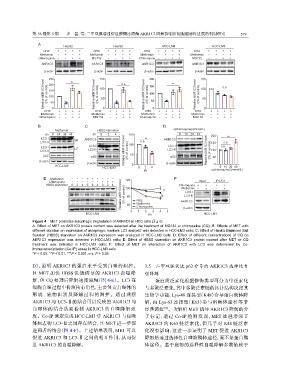
               Figure 4    MET promotes autophagic degradation of AKR1C3 in HCC cells ( x ± s)
               A: Effect of MET on AKR1C3 protein content was detected after the treatment of MG132 or chloroquine (CQ); B: Effects of MET with
               different duration on expression of autophagic markers LC3 and p62 was detected in HCC-LM3 cells; C: Effect of Hank's Balanced Salt
               Solution  (HBSS)  starvation  on  AKR1C3  expression  was  analyzed  in  HCC-LM3  cells;  D:  Effect  of  different  concentrations  of  CQ  on
               AKR1C3  expression  was  detected  in  HCC-LM3  cells;  E:  Effect  of  HBSS  starvation  on  AKR1C3  protein  content  after  MET  or  CQ
               treatment  was  detected  in  HCC-LM3  cells;  F:  Effect  of  MET  on  interaction  of  AKR1C3  with  LC3  was  determined  by  Co-
               Immunoprecipitation (Co-IP) assay in HCC-LM3 cells
               *P < 0.05, **P < 0.01, ***P < 0.001; n.s. P > 0.05


               D),说明    AKR1C3 的蛋白水平受到自噬的调控。                     3.5    二甲双胍促进    p62 介导的   AKR1C3 选择性自
               且  MET  加快   HBSS  饥饿诱导的      AKR1C3 自噬降         噬降解
               解,但   CQ  处理后降解速度减慢(图            4-E)。LC3 在           蛋白质泛素化根据修饰类型可分为单泛素化
               细胞自噬过程中扮演核心角色,主要负责自噬体的                           与多聚泛素化,其中多聚泛素链的拓扑结构决定其
               形成、底物识别及降解过程的调控。通过观察                             生物学功能:Lys-48 连接型(K48)介导蛋白酶体降
               AKR1C3 与   LC3-Ⅱ的结合可以反映的           AKR1C3 与      解,而   Lys-63 连接型(K63)参与溶酶体途径等非
               自噬体的结合从而检测             AKR1C3 的自噬降解强             经典调控 。为解析          MET  诱导   AKR1C3 降解的分
                                                                        [18]
               度。Co-IP   测定发现     HCC-LM3 中   AKR1C3 与自噬        子标记,通过       Co-IP  检测发现,MET      处理增强了
               体标志物     LC3-Ⅱ之间存在结合,且          MET  进一步促        AKR1C3 的   K63 链泛素化,但几乎对           K48 链泛素
               进两者的结合(图        4-F)。上述结果表明,MET          可以      化没有影响,这进一步证明了               MET  促进  AKR1C3
               促进   AKR1C3 和   LC3-Ⅱ之间的相互作用,从而促                 降解是通过选择性自噬溶酶体途径,而不是蛋白酶
               进  AKR1C3 的自噬降解。                                 体途径。鉴于底物的选择性自噬降解多数依赖于

