


Page 68 - 《水产学报》2026年第3期
P. 68
3 期                                     水    产    学    报                                 50 卷

              游群体规模和放流坚持时间长短及放流规模大小                            该上限主要受限于产卵场容量               (♀90  尾),要形成
              呈正相关,但有其内在上限              (♀217  尾,♂197尾),       可持续种群,产卵场容量底线值是♀14                尾  (表  4)。

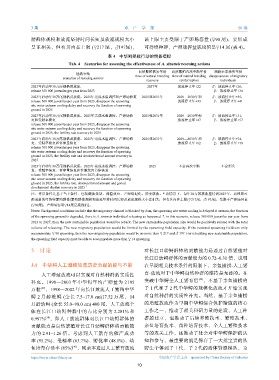
                                               表 4    中华鲟拯救行动的情景模拟
                              Tab. 4    Scenarios for assessing the effectiveness of A. sinensis rescuing actions
                                                            自然繁殖恢复年份      自然繁殖再次中断年份        洄游亲本消失年份
                                 拯救行动
                                                           time of natural breeding time of natural breeding disappearance of migratory
                            scenarios of rescuing actions
                                                               recovery       reinterruption   individuals
              2023年启动年30万尾规格苗放流                                 2037年        放流停止年+22      ♂:放流停止年+26,
              release 300 000 juveniles per year from 2023                                  ♀:放流停止年+34
              2023年启动年30万尾规格苗放流,2025年完成水温调控和产卵场修复             2025和2031年     2029—2030年和   ♂:放流停止年+35,
              release 300 000 juveniles per year from 2023, disappear the spawning  放流停止年+33  ♀:放流停止年+41
              site water autumn cooling delay and recovery the function of spawning
              ground in 2025
              2023年启动年30万尾规格苗放流,2025年完成水温调控、产卵场修              2025和2031年     2029—2030年和   ♂:放流停止年+51,
              复和受精率恢复                                                        放流停止年+47       ♀:放流停止年+57
              release 300 000 juveniles per year from 2023, disappear the spawning
              site water autumn cooling delay and recovery the function of spawning
              ground in 2025, the fertility rate recovery in 2025
              2023年启动年30万尾规格苗放流,2025年完成水温调控、产卵场修              2025和2031年     2029—2030年和   ♂:放流停止年+74,
              复、受精率恢复和怀卵量恢复                                                  放流停止年+62       ♀:放流停止年+70
              release 300 000 juveniles per year from 2023, disappear the spawning
              site water autumn cooling delay and recovery the function of spawning
              ground in 2025, the fertility rate and absolute brood amount recovery in
              2025
              2023年启动年30万尾规格苗放流,2025年完成水温调控、产卵场修                 2025        不会再次中断            不会消失
              复、受精率恢复、怀卵量恢复和性腺发育节律恢复
              release 300 000 juveniles per year from 2023, disappear the spawning
              site water autumn cooling delay and recovery the function of spawning
              ground in 2025, the fertility rate, absolute brood amount and gonad
              development rhythm recovery in 2025  *
              注:背景条件是基于当下条件,包括截流扰动、滞温效应、产卵场退化、历史放流。*.该情景下,每年30万的放流坚持到2027年,后续即可
              形成新的可持续繁殖群体[繁殖群体规模和放流坚持时间长短及放流规模大小正相关,但有其内在上限(♀217尾,♂197尾),受限于产卵场容量
              (♀90尾),产卵场容量♀14尾是底线值]。
              Notes: Background conditions include that the migratory channel is blocked by dam, the spawning site water cooling is delayed at autumn, the function
              of the spawning ground is degraded, there is A. sinensis individual releasing as happened. *. in this scenario, release 300 000 juveniles per year from
              2023 to 2027, then the new sustainable population would be rebuilt. The new sustainable population size would be positively related with the total
              volume of releasing. The new migratory population would be limited by the spawning field capacity. If the restored spawning field can only
              accommodate ♀ 90 spawning, then the new migratory population would be no more than ♀ 217 and ♂ 197. For rebuilding new sustainable population,
              the spawning field capacity must be able to accommodate more than ♀ 14 spawning.

               3    讨论                                         对长江口幼鲟群体的贡献能力是通过自然繁殖对
                                                               长江口幼鲟群体的贡献能力的              0.72~0.31  倍,说明
               3.1    中华鲟人工增殖放流历史贡献的能与不能                       在早期相关技术条件的限制下,亲鱼捕捞-人工繁
                   人工增殖放流可以实现对自然种群的实质性                         育-放流对于中华鲟自然种群的维持是无益的。在
                                                                                      [42]
              补充。1998—2003      年中华鲟年均产卵量为            2 195    突破中华鲟全人工繁育后 ,不基于亲鱼捕捞的
                   [37]
              万粒 ,1998—2002      年向长江放流人工繁殖中华                  子  1  代和子  2  代中华鲟的规模化放流才开始实现
              鲟  2  月龄稚鲟    (全长   7.5~17.0 cm)17.52  万尾,14     对自然种群的实质性补充。当然,基于亲鱼捕捞
              月龄幼鲟     (全长  55.0~98.0 cm) 400  尾,人工放流个         的增殖放流作为早期中华鲟综合保护措施的核心
              体在长江口幼鲟种群中的占比分别为                    2.281%  和    工作之一,推动了相关科研力量的建设、人工种
              0.997% ,即人工放流群体对长江口幼鲟群体的                         群的建立,也推动了后续养殖技术、繁殖技术、
                    [38]
              贡献能力是自然繁殖对长江口幼鲟群体的贡献能                            亲鱼培育技术、苗种培育技术、全人工繁殖技术
              力的   2.91~1.26  倍。考虑到人工繁育的催产成功                   等的攻关工作,还推动了社会对中华鲟保护的认
              率  (95.2%)、受精率    (63.7%)、孵化率     (48.1%)、幼      知和参与,最重要的就是保存了一大批宝贵的从
              鱼培育存活率       (85%) ,则亲本通过人工繁育放流                  野生个体到子       1  代、子  2  代的活体资源梯队,为
                                [41]
              https://www.china-fishery.cn                           中国水产学会主办    sponsored by China Society of Fisheries
                                                            10

