


Page 348 - 《软件学报》2026年第1期
P. 348
揭晚晴 等: 智能合约与      DeFi 协议漏洞检测技术综述                                                345


                 Abstract:  As  core  programmable  components  of  blockchain,  smart  contracts  are  responsible  for  asset  management  and  the  execution  of
                 complex  business  logic,  forming  the  foundation  of  decentralized  finance  (DeFi)  protocols.  However,  with  the  rapid  advancement  of
                 blockchain  technology,  security  issues  related  to  smart  contracts  and  DeFi  protocols  have  become  increasingly  prominent,  attracting
                 numerous  attackers  seeking  to  exploit  vulnerabilities  for  illicit  gains.  In  recent  years,  several  major  security  incidents  involving  smart
                 contracts  and  DeFi  protocols  have  highlighted  the  importance  of  vulnerability  detection  research,  making  it  a  critical  area  for  security
                 defense.  This  study  systematically  reviews  existing  literature  and  proposes  a  comprehensive  framework  for  research  on  vulnerability
                 detection  in  smart  contracts  and  DeFi  protocols.  Specifically,  vulnerabilities  and  detection  techniques  are  categorized  and  analyzed  for  both
                 domains.  For  smart  contracts,  the  study  focuses  on  the  application  of  large  language  models  (LLM)  as  primary  detection  engines  and  their
                 integration  with  traditional  methods.  For  DeFi  protocols,  it  categorizes  and  details  various  protocol-level  vulnerabilities  and  their  detection
                 methods,  analyzing  the  strengths  and  limitations  of  detection  strategies  before  and  after  attacks,  addressing  gaps  in  existing  reviews  on
                 DeFi  vulnerability  detection.  Finally,  this  study  summarizes  the  challenges  faced  by  current  detection  approaches  and  outlines  future
                 research directions, aiming to provide new insights and theoretical support for the security detection of smart contracts and DeFi protocols.
                 Key words:  smart contract; DeFi protocol; vulnerability detection; large language model (LLM)

                    区块链   [1] 作为一种分布式账本技术, 具备去中心化、不可篡改、透明等特性. 智能合约                      [2] 作为区块链的核心
                 组成部分, 则赋予了区块链可编程的特性, 使其可以利用自动化脚本代码来编辑和操作业务及数据, 大幅推动区块
                 链应用迅速渗透到金融、供应链、医疗等经济社会多个领域                     [3] . 在此基础上, 去中心化金融     (decentralized finance,
                 DeFi) 得以迅速发展. DeFi 协议通过智能合约提供了无须信任中介的金融服务, 例如借贷、资产交易、流动性挖
                     [4]
                 矿和衍生品合约等. DeFi 协议的业务特性包括去中心化治理、无中介信任、资产流动性优化、可组合性和开放
                 性, 允许用户直接在区块链上进行点对点的金融交易, 促进了更为公平和高效的金融市场发展. 然而, 这些特性在
                 为用户提供便利和创新的同时, 也为攻击者创造了潜在的漏洞利用机会.
                    随着区块链技术的广泛应用, 智能合约和              DeFi 协议的安全性问题也愈发凸显          [5,6] , 是制约区块链生态系统稳
                 定运行的关键. 智能合约的不可篡改性虽然确保了交易的透明性和信任度, 但也使得一旦代码中存在漏洞, 修复这
                 些漏洞将变得极为困难. 随着         DeFi 生态系统的发展, 智能合约的安全问题逐步延伸至               DeFi 协议, 导致了更为复杂
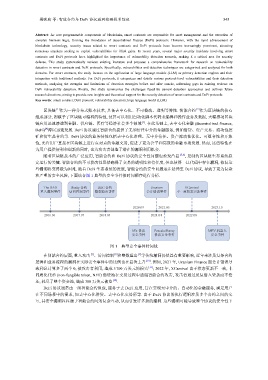
                 和严重的安全风险, 下面结合图         1  典型的安全事件按时间顺序进行分析.


                    The DAO      Parity 合约  BEC 合约                  Uranium        XCarnival
                   重入漏洞事件       访问控制事件     整型溢出事件                 会计错误事件       不一致状态更新事件


                                                            2020.09    2021.05                 2023.10
                     2016.06      2017.07    2018.04                2021.04         2022.08


                                                            bZx 协议    PancakeBunny           MEV 机器人
                                                            安全事件      协议安全事件                   安全事件


                                                  图 1 典型安全事件时间线

                    在智能合约层面, 重入攻击        [7] 、访问控制  [8] 和整数溢出  [9] 等传统漏洞仍然具有重要影响, 近年来涉及复杂合约
                 逻辑和业务流程的漏洞在实际安全事件中的比例也在显著上升                      [10] . 例如, 2021  年, Uranium Finance 因会计错误导
                 致利息计算多了两个        0, 被攻击者利用, 造成    5 700  万美元的损失   [11] ; 2022  年, XCarnival 由于状态更新不一致, 非
                 同质化代币    (non-fungible token, NFT) 借贷池在交易过程中遭遇智能合约攻击, 攻击者通过反复借入贷款而不偿
                 还, 耗尽了整个资金池, 造成       380  万美元被盗  [12] .
                    DeFi 协议通常由一组智能合约组成, 服务于去             DeFi 应用, 旨在实现无中介的、自动化的金融服务, 满足用户
                 在不同场景中的需求, 如去中心化借贷、去中心化交易所等. 由于                     DeFi 协议的执行逻辑涉及多个合约之间的交
                 互, 其安全漏洞往往源于智能合约间的复杂互动, 从而引发许多新的漏洞. 这些漏洞可能导致整个协议的安全性下

