


Page 145 - 《软件学报》2026年第4期
P. 145
1586                                                       软件学报  2026  年第  37  卷第  4  期


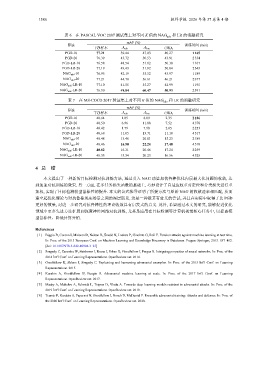
                              表 6 在  PASCAL VOC 2007  测试集上对不同     K  值的  NAG ad 和 v  LR  的消融研究

                                                         mAP (%)
                               算法                                                  训练时间 (min)
                                          干净样本         A cls     A loc    CWA
                              PGD-10        77.21      39.44    47.03     40.27       1 165
                              PGD-20        76.39      43.72    50.53     43.91       2 334
                             PGD-LR-10      76.58      48.54    51.12     50.38       1 167
                             PGD-LR-20      77.19      49.43    51.92     50.04       2 343
                             NAG adv -10    76.95      42.19    55.52     43.97       1 189
                             NAG adv -20    77.21      44.70    56.61     46.21       2 377
                            NAG adv -LR-10  77.10      41.55    55.27     42.99       1 195
                            NAG adv -LR-20  76.90      49.84    60.47     50.93       2 391

                               表 7 在  MS-COCO 2017  验证集上对不同     K  值的  NAG ad 和 v  LR  的消融研究

                                                         mAP (%)
                               算法                                                  训练时间 (min)
                                          干净样本         A cls     A loc    CWA
                              PGD-10        40.64      1.85      8.09      2.35       2 186
                              PGD-20        40.50      6.96     11.88      7.52       4 378
                             PGD-LR-10      40.42      1.79      7.98      2.05       2 253
                             PGD-LR-20      40.68      11.05    13.71     11.18       4 517
                             NAG adv -10    40.48      13.46    20.81     15.23       2 189
                             NAG adv -20    40.46      16.50    22.24     17.48       4 510
                            NAG adv -LR-10  40.82      16.31    20.46     17.24       2 259
                            NAG adv -LR-20  40.35      15.34    20.23     16.56       4 525

                  4   总 结

                    本文提出了一种新的目标检测对抗训练方法, 通过引入                   NAG  动量加快鲁棒优化内层最大化问题的收敛, 达
                 到加速对抗训练的效果. 另一方面, 在多任务损失函数的基础上, 巧妙设计了自适应权重对定位和分类损失进行重
                 加权, 实现了目标检测模型鲁棒性的提升. 本文的公式推导证明了所提方法与原始                          NAG  的收敛速率相匹配, 从而
                 建立起优化理论与对抗鲁棒现实场景之间的深层联系, 这是一种极其有意义的尝试, 并且在实际中取得了比                                   PGD
                 更好的效果, 对进一步研究对抗鲁棒性的理论收敛具有启发式的意义. 此外, 希望通过本文的研究, 能够促进优化
                 领域中更多先进方法扩展到深度神经网络对抗训练, 尤其是应用在目标检测等计算机视觉核心任务中, 以提高模
                 型鲁棒性、降低计算开销.

                 References
                  [1]   Biggio B, Corona I, Maiorca D, Nelson B, Šrndić N, Laskov P, Giacinto G, Roli F. Evasion attacks against machine learning at test time.
                     In: Proc. of the 2013 European Conf. on Machine Learning and Knowledge Discovery in Databases. Prague: Springer, 2013. 387–402.
                     [doi: 10.1007/978-3-642-40994-3_25]
                  [2]   Szegedy C, Zaremba W, Sutskever I, Bruna J, Erhan D, Goodfellow I, Fergus R. Intriguing properties of neural networks. In: Proc. of the
                     2014 Int’l Conf. on Learning Representations. OpenReview.net. 2014.
                  [3]   Goodfellow  IJ,  Shlens  J,  Szegedy  C.  Explaining  and  harnessing  adversarial  examples.  In:  Proc.  of  the  2015  Int’l  Conf.  on  Learning
                     Representations. 2015.
                  [4]   Kurakin  A,  Goodfellow  IJ,  Bengio  S.  Adversarial  machine  learning  at  scale.  In:  Proc.  of  the  2017  Int’l  Conf.  on  Learning
                     Representations. OpenReview.net. 2017.
                  [5]   Madry A, Makelov A, Schmidt L, Tsipras D, Vladu A. Towards deep learning models resistant to adversarial attacks. In: Proc. of the
                     2019 Int’l Conf. on Learning Representations. OpenReview.net. 2019.
                  [6]   Tramèr F, Kurakin A, Papernot N, Goodfellow I, Boneh D, McDaniel P. Ensemble adversarial training: Attacks and defenses. In: Proc. of
                     the 2020 Int’l Conf. on Learning Representations. OpenReview.net. 2020.

