


Page 24 - 《软件学报》2025年第9期
P. 24
徐学政 等: RISC-V  内存一致性模型的同地址顺序一致性定理证明                                             3935


                                                    P0             P1
                                                   a: W x=1       c: R x=2
                                                   co       rf

                                                  b: W x=2
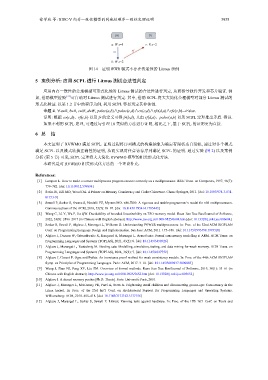
                                        图 14 证明   WWR  模式不存在传递性的       Litmus 示例

                 5   案例分析: 应用     SCPL  进行  Litmus 测试合法性判定

                    应用内存一致性的公理模型可形式化地对               Litmus 测试的合法性进行判定, 从而指导软件开发和芯片验证. 例
                 如, 借助模型检验     [21] 可自动对  Litmus 测试进行判定. 其中, 借助   SCPL  将大大简化公理模型对部分         Litmus 测试的
                 形式化验证. 以第     1.2  节中的程序为例, 利用    SCPL  容易判定其非法性.
                    命题  4. ∀a∈R, b∈R, c∈W, d∈W, poloc(a,b)∧poloc(c,d)∧co(c,d)∧rfe(d,a)∧rfe(c,b)→False.
                    证明: 根据   co(c,d)、rf(c,b) 以及  fr 的定义可得  fr(b,d), 又由  rf(d,a)、poloc(a,b) 以及  SCPL  定理推出矛盾. 得证.
                    如果不利用     SCPL  定理, 可通过与引理    10  类似的方法进行证明, 相比之下, 基于         SCPL  的证明更为直接.

                 6   总 结

                    本文证明了     RVWMO   满足  SCPL. 证明过程将序列模式的构建抽象为确定有限状态自动机, 通过对各个模式
                 满足  SCPL  以及模式转换正确性的证明, 从而实现对任意访存序列满足                   SCPL  的证明. 通过实验    (图  2) 以及案例
                 分析  (第  5  节) 可见, SCPL  定理将大大简化  RVWMO   模型的相关形式化方法.
                    本研究是对     RVWMO  相关形式化方法的一个理论补充.

                 References:
                  [1]   Lamport L. How to make a correct multiprocess program execute correctly on a multiprocessor. IEEE Trans. on Computers, 1997, 46(7):
                     779–782. [doi: 10.1109/12.599898]
                  [2]   Sorin DJ, Hill MD, Wood DA. A Primer on Memory Consistency and Cache Coherence. Cham: Springer, 2011. [doi: 10.1007/978-3-031-
                     01733-9]
                  [3]   Sewell P, Sarkar S, Owens S, Nardelli FZ, Myreen MO. x86-TSO: A rigorous and usable programmer’s model for x86 multiprocessors.
                     Communications of the ACM, 2010, 53(7): 89–97. [doi: 10.1145/1785414.1785443]
                  [4]   Wang C, Lü Y, Wu P, Jia QW. Decidability of bounded linearizability on TSO memory model. Ruan Jian Xue Bao/Journal of Software,
                     2022, 33(8): 2896–2917 (in Chinese with English abstract). http://www.jos.org.cn/1000-9825/6604.htm [doi: 10.13328/j.cnki.jos.006604]
                  [5]   Sarkar S, Sewell P, Alglave J, Maranget L, Williams D. Understanding POWER multiprocessors. In: Proc. of the 32nd ACM SIGPLAN
                     Conf. on Programming Language Design and Implementation. San Jose: ACM, 2011. 175–186. [doi: 10.1145/1993498.1993520]
                  [6]   Alglave J, Deacon W, Grisenthwaite R, Hacquard A, Maranget L. Armed cats: Formal concurrency modelling at ARM. ACM Trans. on
                     Programming Languages and Systems (TOPLAS), 2021, 43(2): 8. [doi: 10.1145/3458926]
                  [7]   Alglave J, Maranget L, Tautschnig M. Herding cats: Modelling, simulation, testing, and data mining for weak memory. ACM Trans. on
                     Programming Languages and Systems (TOPLAS), 2014, 36(2): 7. [doi: 10.1145/2627752]
                  [8]   Alglave J, Cousot P. Ogre and Pythia: An invariance proof method for weak consistency models. In: Proc. of the 44th ACM SIGPLAN
                     Symp. on Principles of Programming Languages. Paris: ACM, 2017. 3–18. [doi: 10.1145/3009837.3009883]
                  [9]   Wang J, Zhan NJ, Feng XY, Liu ZM. Overview of formal methods. Ruan Jian Xue Bao/Journal of Software, 2019, 30(1): 33–61 (in
                     Chinese with English abstract). http://www.jos.org.cn/1000-9825/5652.htm [doi: 10.13328/j.cnki.jos.005652]
                 [10]   Alglave J. A shared memory poetics [Ph.D. Thesis]. Paris: Université Paris, 2010.
                 [11]   Alglave J, Maranget L, McKenney PE, Parri A, Stern A. Frightening small children and disconcerting grown-ups: Concurrency in the
                     Linux  kernel.  In:  Proc.  of  the  23rd  Int’l  Conf.  on  Architectural  Support  for  Programming  Languages  and  Operating  Systems.
                     Williamsburg: ACM, 2018. 405–418. [doi: 10.1145/3173162.3177156]
                 [12]   Alglave  J,  Maranget  L,  Sarkar  S,  Sewell  P.  Litmus:  Running  tests  against  hardware.  In:  Proc.  of  the  17th  Int’l  Conf.  on  Tools  and

