


Page 9 - 摩擦学学报2025年第9期
P. 9
第 9 期                 冯芸, 等: G20Mn5QT铸钢激光熔覆316L涂层微动摩擦磨损特性研究                                 1263

                 1.0                    Substrate-10 μm             1.0                  Cladding layer-10 μm

                 0.9                    Substrate-20 μm             0.9                  Cladding layer-20 μm
                 0.8                    Substrate-40 μm             0.8                  Cladding layer-40 μm
                Friction coefficient  0.6                          Friction coefficient  0.6
                                                                    0.7
                 0.7
                                                                    0.5
                 0.5
                                                                    0.4
                 0.4
                 0.3
                 0.2          Average friction coefficient=0.411    0.3           Average friction coefficient=0.406
                                                                    0.2
                                                                                  Average friction coefficient=0.647
                              Average friction coefficient=0.612
                 0.1          Average friction coefficient=0.675    0.1           Average friction coefficient=0.728
                 0.0                                                0.0
                   1   10  100  1 000  10 000  15 000  20 000         1   10  100  1 000  10 000  15 000  20 000
                               Number of cycle                                    Number of cycle
                               (a) Substrate                                     (b) Cladding layer
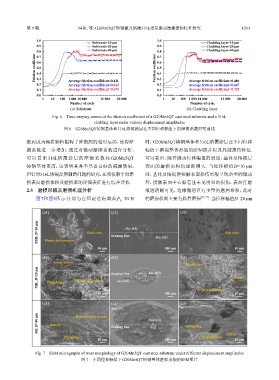
                       Fig. 6    Time-varying curves of the friction coefficient of a G20Mn5QT cast steel substrate and a 316L
                                         cladding layer under various displacement amplitudes
                            图 6    G20Mn5QT铸钢基体和316L熔覆涂层在不同位移幅值下的摩擦系数时变曲线

            磨屑成为硬质颗粒阻碍了摩擦副的相对运动,使得摩                            时,G20Mn5QT铸钢基体和316L熔覆涂层在不同位移
            擦系数进一步增加. 通过对微动摩擦系数进行分析,                           幅值下磨痕整体形貌的SEM照片以及局部损伤特征.

            可以看出316L熔覆涂层的摩擦系数较G20Mn5QT                         可以看出,随着微动位移幅值的增加,基体及熔覆层
            铸钢基体更高,这表明其并不具备良好的减摩效果,                            表面的磨损面积均逐渐增大. 当位移幅值D=10 μm
            但针对316L熔覆涂层耐磨问题的研究,还须依赖于对磨                         时,基体及熔覆层接触表面损伤形貌呈现典型的微动
            损表面磨损体积及磨损率的详细表征进行综合评估.                            环,接触表面中心黏着且未见明显的损伤,表面打磨
             2.3    磨损形貌及磨损机理分析                                痕迹清晰可见,边缘微滑区有少量的磨屑堆积,此时
                图7和图8所示分别为在恒定法向载荷F =30 N                       的磨损机制主要为黏着磨损            [36-37] . 当位移幅值D=20 μm
                                                    n

                   (a1)                         (a2)                          (a3)

                 PSR: D=10 μm  Plastic deformation  Stick zone  Scaning line  See (a3)           Slip zone
                                                       See (a1)


                                           10 μm                       100 μm                        10 μm

                   (b1)                         (b2)                          (b3)
                        Loose debris
                                                                                Plastic flow
                 MR: D=20 μm  Ploughing  Dlamination crack  Scaning line  See (b3)                   Debris

                                                   See (b1)

                                           10 μm                       100 μm          Delamination  10 μm

                   (c1)                         (c2)                          (c3)
                                                 See (c1)
                 SR: D=40 μm  Debris  Delamination cracks  Scaning line  See (c3)  Ploughing


                            Ploughing                                                  Delamination  Debris
                                           10 μm                       100 μm                        10 μm

                Fig. 7    SEM micrographs of wear morphology of G20Mn5QT cast steel substrate under different displacement amplitudes
                                    图 7    不同位移幅值下G20Mn5QT铸钢基体磨损形貌的SEM照片

