


Page 130 - 摩擦学学报2025年第9期
P. 130
1384                                   摩擦学学报(中英文)                                        第 45 卷


                     (a)                         30  (b)  Tensile modulus  28.6  40  10 8  (c)   0CF-unoriented
                  12
                                                                                     3CF-unoriented
                  Tensile strength/MPa  9 6 3   0CF-unoriented  Tensile modulus/MPa  25  17.9  24   Toughness/(MJ/m 3 )  Tensile stress/MPa  6 4 2
                                                       Toughness
                                                                          32
                                                                                      3CF-oriented
                                                 20
                                                                          16
                                                 15
                                                                          8
                              3CF-unoriented
                   0
                                                    3CF-unoriented
                               200
                       0   100  3CF-oriented 300  400  10  10.3  3CF-oriented  0  −2 0  0  50  100  150  200
                            Strain/%         0CF-unoriented                              Strain/%
                     (d)    Energy dissipation  1.0  10  (e)  50%               15  (f)   Energy dissipation coefficient  15.44 0.7
                 Energy dissipation/(MJ/m 3 )  9.0  9.03  8.41  0.8 Energy dissipation coefficient  Tensile stress/MPa  8 6 4 2   200%  Energy dissipation/(MJ/m 3 )  12 9 6 3  4.45  8.41  0.6 Energy dissipation coefficient
                 10.5
                                                       100%
                                                                                     Energy dissipation
                        Energy dissipation coefficient
                                                       150%
                                                       300%
                                                                                                       0.5
                                         0.6
                  7.5
                                                                                                       0.4
                  6.0
                       5.69
                     3CF-unoriented
              0CF-unoriented  3CF-oriented  0.4     0  0 50 100 150 200 250 300 350  0  0.49  1.59  Strain/%  0.3
                                                                                   50 100 150 200 250 300
                                                           Strain/%
                     (g)                           (h)                            (i)
                  10 8   1  2  3                  8           Energy dissipation  9.5  8               50
                  Tensile stress/MPa  6 4   4  5  6  7  8  9  10  Energy dissipation/(MJ/m 3 )  6 4  8.5 Maximum stress/MPa  Tensile stress/MPa  6 4  50%  100%  150%  200%  45 Stress relaxation rate/%
                                                              Maximum stress
                                                                        9.0
                                                                                                       40
                                                                        8.0
                   0 2                            2 0                   7.5      2 0                   35
                                                                        7.0
                                                                                                       30
                      0   50  100  150  200        0  2   4   6  8  10             0   2 000  4 000  6 000
                            Strain/%                      Cycles                           Time/s
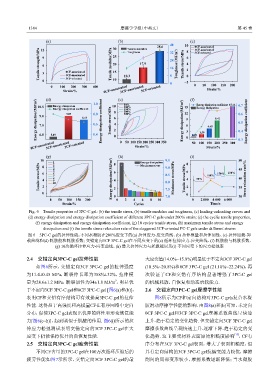
             Fig. 6    Tensile properties of 3PC-C gel: (b) the tensile stress, (b) tensile modulus and toughness, (c) loading-unloading curves and
             (d) energy dissipation and energy dissipation coefficient of different 3PC-C gels under 200% strain; (e) the cyclic tensile properties,
                (f) energy dissipation and energy dissipation coefficient, (g) 10 cycles tensile stress, (h) maximum tensile stress and energy
                   dissipation and (i) the tensile stress relaxation rate of the staggered 3CF-oriented PC-C gels under different strains
             图 6    3PC-C gel的拉伸性能:不同水凝胶在200%应变下的(a) 拉伸应力-应变曲线、(b) 拉伸模量和拉伸韧性、(c) 拉伸加载-卸
            载曲线和(d) 耗散能和耗散系数;交错定向3CF 3PC-C gel在不同应变下的(e) 循环拉伸应力-应变曲线、(f) 耗散能与耗散系数、
                         (g) 10次循环拉伸应力-应变曲线、(h) 最大拉伸应力与耗散能以及(i) 不同应变下的应力松弛率

             2.4    交错定向3PC-C gel拉伸性能                          大应变值(14.0%~15.9%)明显低于不定向3CF 3PC-C gel
                如图6所示,交错定向3CF 3PC-C gel的拉伸强度                   (18.5%~20.8%)和0CF 3PC-C gel (21.10%~22.24%),再
            为11.4±0.45 MPa,断裂伸长率为358%±32%,拉伸模                  次验证了CF和交错有序结构显著增强了3PC-C gel
                                                  3
            量为28.6±1.2 MPa,断裂韧性为34±1.8 MJ/m ,明显优               的机械耗散、自恢复和动态承载能力.
            于不定向3CF 3PC-C gel和0CF 3PC-C gel [图6(a)和(b)],        2.6    交错定向3PC-C gel摩擦学性能
            表明CF和交错有序结构可有效提高3PC-C gel的拉伸                           图8所示为CF和定向结构对3PC-C gels复合水凝
            性能. 这得益于高强度和高模量CF在有序网络中定向                          胶滑动摩擦学性能的影响. 由图8(a)和(b)可知,未定向
            分布,促使3PC-C gel表现出优异的弹性和形变恢复能                       0CF 3PC-C gel和3CF 3PC-C gel摩擦系数曲线呈快速

            力[图6(c~h)],起到类似于肌腱的作用. 图6(i)所示的拉                   上升-趋于稳定的变化趋势. 但交错定向3CF 3PC-C gel
            伸应力松弛测试表明交错定向的3CF 3PC-C gel在大                      摩擦系数曲线呈现快速上升-逐渐下降-趋于稳定的变
                                                                                                     [15]
            应变下仍能保持优异的自恢复性能.                                   化趋势. 这主要受材料表面原始粗糙度影响 ,CF有
             2.5    交错定向3PC-C gel疲劳性能                          序分布在3CF 3PC-C gel表面,增大了表面粗糙度,但
                不同CF含量的3PC-C gel在100万次循环压缩后的                   具有定向结构的3CF 3PC-C gel抗蠕变能力较优,摩擦
            疲劳性能如图7示所示,交错定向3CF 3PC-C gel的最                     副间的局部变形较小,摩擦系数逐渐降低;当水凝胶

