


Page 101 - 《爆炸与冲击》2026年第3期
P. 101
第 46 卷     张柱国,等: 泡沫铝夹芯结构抗鸟体冲击吸能机理及在飞机机头端框挡板中的应用                                第 3 期

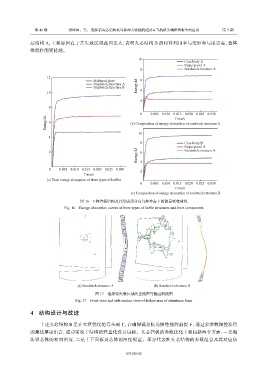
               芯结构   A,主要原因在于其失效区域范围更大,表明夹芯结构                         B  的材料利用率与变形参与度更高,整体
               吸能性能更优越。

                                                              10

                                                                                   Core body A
                                                                                   Upper panel A
                                                               8                   Sandwich structure A
                      12
                                           Stiffened plate     6
                                           Sandwich structure A
                                           Sandwich structure B  Energy/kJ
                      10                                       4
                                                               2
                       8
                                                               0    0.005  0.010  0.015  0.020  0.025  0.030
                     Energy/kJ  6                          (b) Composition of energy absorption of sandwich structure A
                                                                               Time/s

                                                              10
                       4
                                                               8                   Core body B
                                                                                   Upper panel B
                                                              Energy/kJ  4
                       2                                       6                   Sandwich structure B


                       0   0.005  0.010  0.015  0.020  0.025  0.030  2
                                      Time/s
                       a  Total energy absorption of three types of baffles
                                                               0    0.005  0.010  0.015  0.020  0.025  0.030
                                                                               Time/s
                                                           (c) Composition of energy absorption of sandwich structure B
                                     图 16    3  种挡板结构及其组成部分在鸟撞冲击下的能量吸收曲线
                              Fig. 16    Energy absorption curves of three types of baffle structures and their components


                                   (a) Sandwich structure A          (b) Sandwich structure B

                                           图 17    泡沫铝失效区域的正视图与侧面剖视图
                                   Fig. 17    Front view and side section view of failure area of aluminum foam

                4    结构设计与改进

                   上述夹芯结构       B  是在大量优化仿真基础上,在确保满足抗鸟撞性能的前提下,通过多参数调控获得
               的最优厚度组合,成功实现了结构的轻量化设计目标。夹芯挡板的参数优化主要包括两个方面:一是泡
               沫铝芯体的相对密度,二是上下面板及芯体的厚度配置。部分代表性夹芯结构的参数组合及其对应仿


                                                         033101-12

